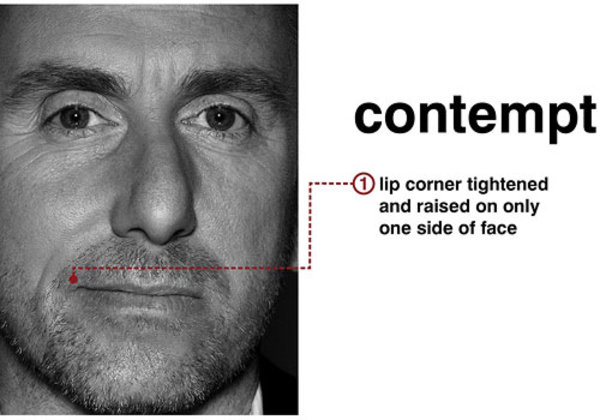
I haven’t written much about status emotions , recently, but I came across one of my favorite Facebook memes and remembered again how central it seems. I don’t endorse the misogyny here, but it perfectly describes the way that fundamental attribution bias transforms resentment into contempt, and thus leads, in my view, to both epistemic…
Most people who know me in person would at least consider using the term “snarky” in their description of me, which is why John Barnes’ polemic against “snark” troubled me so: It’s a currently fashionable powerful rhetorical weapon that allows the uninvolved and the never-to-be-involved to discredit people who do, or attempt – anything at…
I think about inequality a lot. But I also think about the middle class a lot, which isn’t quite the same thing. Generally, my sympathies lie with the “least advantaged” or “subaltern,” but I also feel the pull of the American cultural commitment to the middle class. There can be little doubt that we are…
Most academics know some version of the critique of elite rule, administrative power, and centralized regulation by experts. Hannah Arendt called bureaucracy the “rule of No Man;” Michel Foucault described the overlap of legislative power, knowledge-production, and the apparatus of discipline and control; Iris Marion Young defended simple street activism against the demand that political…
Whenever I talk to students about democracy, I like to emphasize that the original term for democratic rule was isonomy . Consider the account Otanes gives in Herodotus’ History : “[T]he rule of the multitude [plêthos de archon] has… the loveliest name of all, equality [isonomiên]…. It determines offices by lot, and holds power accountable, and…
I made the mistake of teaching a set of essays on gay marriage at the end of the semester. I call it a “mistake” because I find it very difficult to give my traditional charitable interpretation to the work of folks like John Finnis and Robert George, who make arguments from a definition of marriage…
One of the major debates in the philosophy of emotions is whether they ought to be treated as propositional attitudes and judgments capable of truth-tracking or simply as moods that can be appropriate or inappropriate to a context, but not falsifiable or verifiable. The question is whether emotions are a kind of intentional cognition or not….
In Ted Chiang’s short story, ” Liking What You See: A Documentary ,” he offers us a typical science-fictional hypothetical, in the form of a staged debate regarding the value of seeing beauty in others. What if you could remove your own capacity to see the beauty in a human face? While at first this…
Literacy is one of the major factors in female empowerment : As female education rises, fertility, population growth, and infant and child mortality fall and family health improves. Increases in girls’ secondary school enrollment are associated with increases in women’s participation in the labor force and their contributions to household and national income. Women’s increased…
John Protevi, Mark Lance, and Eric Schliesser have created a bit of a stir in the blogosphere with their call to shun sexually harrassing philosophy professors: We believe there are informal sanctions that could make a difference. The Feminist Philosophers blog recently suggested not inviting serial harassers to conferences. One could easily extend this to not inviting…
One major defense of status emotions like deference and disdain is that they count as judgments of a person’s character. We defer to experts because they have a history of being right; we disdain scoundrels because they have a history of cheating or misleading us. In this sense, status emotions are akin to other reactive…
There’s been a conflict running through Jonathan Haidt’s work that it’s time for him to address. On the one hand, he asserts that there are characteristic moral intuitions that distinguish partisan liberals from partisan conservatives . He recently argued that these moral intuitions are demonstrated by the fact that the vast majority of social psychologists…
Tyler Cowen’s new e-pamphlet ( The Great Stagnation ) takes on the slowing gains to be had from social and technological progress and offers an interesting explanation of some of the trends that many people see as troubling: the flat arc of median incomes since 1973 and the apparently universal surprise that the last decade…
Responding to the American Psychological Association’s Task Force on Socioeconomic Status , Peter Levine discusses some of the difficulties in measuring socioeconomic status : To take another example: you need wealth and family connections to be admitted to certain snobby clubs. But having wealth and family connections might hurt your chances of hanging out with the…
1. Two studies suggest that women apologize more than men. The reason? They are more easily offended, and find more actions more offensive: In Study 1, participants reported in daily diaries all offenses they committed or experienced and whether an apology had been offered. Women reported offering more apologies than men, but they also reported…
From Tyler Cowen : I would not say that “we are now at war with the terrorists” but our situation has some war-like elements. Any persistent war has required major social changes, if only temporary ones, in how the body is viewed and handled. If we are so unwilling to even consider these changes in…
Walmart is planning to open several new ” urban ” stores in the District, and I’m pretty excited about it. ( via ) One of them will be just two blocks away from me, and I plan to shop there. Right now, I do most of my shopping at the rundown, overpriced Safeway or at…
Perhaps a better title for Appiah’s book would be The Shame Code, because his account of the role of honor in policing behavior. For Appiah, an honor code is a set of principles for justifying respect, and his examples show that the drive to pursue of honor and avoid of dishonor can be extremely influential. Many people will do anything to preserve their reputations, and if their society requires them to fight duels, keep slaves, bind their feet, murder their daughters, or mutilate their childrens’ genitals, they will. While folks like me see this as a reason to decry honor, Appiah sees an opportunity: all we need to do is change the code, and the duelers, slavers, binders, murders, and mutilators will change their tune.
My last post has generated some controversy on Facebook, where the audience is a bit more diverse, faith-wise, than those who read the blog. I thought it might be useful to continue pressing on the critique of instrumental beliefs with an instructive list of warning signs that your opinions are primarily instrumental, from Robin Hanson…
NPR has a story about group intelligence : Anita Woolley, an assistant professor of organizational behavior and theory, has been studying what it means to say a group is “intelligent.” So she created teams of two to five people, drawn from 700 volunteers, and asked the teams to solve various kinds of problems. “We had…
Following up on my claim in the last post that “honor produces error,” in my view, the problem is epistemic privilege, i.e. deference. By deference, I mean the epistemic privileges that some people receive or earn through demonstrating their erudition or looking like they know what they’re talking about. When you think of deference, you…
Dr. J responds to my criticism of her position on plagiarism detection. I am, she accuses, guilty of Cold War paranoia and preemptive warfare with my students: That is to say, the classroom is a millieu in which everyone is suspicious and noone can be trusted, so every preemptive security mechanism one can employ should be employed. This is,…
Dr. Trott has a nice post over at Mahogany Feed on Terry Jones’ threat to burn Korans over the weekend to commemorate the attacks of September 11th and to remind Muslims “not to push their agenda on us .” Dr. Trott suggests that this threat to burn the holy book of a cultural group, with…
In a post on the fate of the university, Steve writes : We appear to have a situation where the public will not invest in education because it is more concerned in distributing the state’s patronage to older citizens, which has created an education system which has had to cut spending on public service, and…
In the wake of Arizona’s attempt to localize immigration enforcement , I think it’s time for Congress and the Obama administration to return to immigration reform. If anything can justify American exceptionalism , it’s the waves of immigration that have repeatedly demonstrated that we can offer a better life to foreigners without losing our own…
A friend suggests that my recent arguments against the moral status of contempt ignored an important role it plays in policing our moral community. The concern is that if we cannot feel (and expect others to feel) contempt for someone like Bernie Madoff, then we will lose the morally instructive value of punishment. If we…
Ever since the markets became front page news, I’ve been caught in some sort of economics blog vortex. At this point, most of my reading is no longer directed towards macro-economic issues and institutional critique, but rather focuses on the economics department at George Mason. The problem is that it seems like these people really…
[caption id=”attachment_3357″ align=”alignright” width=”484″] “Hey, look at those assholes over there. Ordinary fuckin’ people. I hate ’em.” -Repo Man[/caption] In this post, I want to argue that disdain, contempt, and scorn have no moral place in our emotional lives. In short, my claim is that these emotions are immoral because they target persons and not…
I’ve written about Robert Putnam before in this space, but I’ve been holding off on commenting on his most recent ‘discovery’ that ethnic diversity leads to significant losses of public trust . Apparently the full Skytte lecture will be published sometime soon in Scandinavian Political Studies . Still no sign of it, though the Financial…
Sam Harris has started another great debate over religion, this time with conservative author Andrew Sullivan. They’ve been fairly civil with each other, and what little upset there has been has arisen from the justifiable claims they both make about the intellectual honesty of theism. In other debates, Harris has been too civil with his…
The argument for a separate status for the mental extends ultimately to the claim that there is something it is like to hope, believe, or experience redly, and that this likeness is irreducible to any other form of explanation that depends only on third-person arguments. In one form, this can be seen in Frank Jackson’s…
I still haven’t solved the problem of governmentality, but I do have some more things to say about the Schmittian sovereign and the status of exceptional powers. If we compare the New Deal with the Patriot Act, we can see that emergencies don’t have to necessarily supply the executive with one-way options for action. It’s…
So, if the last post was all vitriol and false hope, today I want to focus on options. Specifically, what’s possible today that was unimaginable a century ago? 1. Communes without communal bathrooms. Look, the real problem with communism is that half of the population are slobs. Yet the appeal of the commune is the…
Take the group of things we call ‘apples’. Let’s not get too technical, but merely admit that we mostly know what that word entails, and that we can therefore select members of the group from non-members when we go to the grocery store. We know not to put a potato on an elementary teacher’s desk,…