Some recent posts by Dan Kahan on the subject of “cultural cognition” deserve attention: (Cultural cognition refers to the tendency of individuals to conform their beliefs about disputed matters of fact (e.g., whether global warming is a serious threat; whether the death penalty deters murder; whether gun control makes society more safe or less) to…
The speculative post on empathy generated a great set of comments over on Facebook , but I think the discussion was weighed down by the framing from the original article regarding “Extreme Female Brain.” Those (like Cordelia Fine ) who have rejected the account of autism-spectrum disorders as “Extreme Male Brain” have largely done so…
In his initial response to the the Crooked Timber bloggers , Cowen also suggests that he doesn’t like the “mood affiliation” of the CT bloggers: I am not comfortable with the mood affiliation of the piece. How about a simple mention of the massive magnitude of employee theft in the United States, perhaps in the…
Crazyism about X is the view that something it would be crazy to believe must be among the core truths about X. It’s probably more common than we’d like to think. Some significant portion of professional philosophers can be manipulated into accepting or refusing the Doctrine of Double Effect on the basis of the order…
When I was an undergraduate, I took a class called “Truth and Beauty” with the poet Ann Lauterbach . It was basically a class on reading and writing essays, but I took it because I was a philosophy major and I thought it would be about aesthetics, i.e. about whether judgments about beauty can be…
I made the mistake of teaching a set of essays on gay marriage at the end of the semester. I call it a “mistake” because I find it very difficult to give my traditional charitable interpretation to the work of folks like John Finnis and Robert George, who make arguments from a definition of marriage…
One of the major debates in the philosophy of emotions is whether they ought to be treated as propositional attitudes and judgments capable of truth-tracking or simply as moods that can be appropriate or inappropriate to a context, but not falsifiable or verifiable. The question is whether emotions are a kind of intentional cognition or not….
In Ted Chiang’s short story, ” Liking What You See: A Documentary ,” he offers us a typical science-fictional hypothetical, in the form of a staged debate regarding the value of seeing beauty in others. What if you could remove your own capacity to see the beauty in a human face? While at first this…
I have a tendency to speak in a way that conflates “evidence” and “reasons.” I’m pretty sure they are interchangeable. When we discover evidence, we discover a reason to believe some proposition. At the same time, reason-giving is the exchange of evidence, even when it is nothing more than the exchange of priors and ungrounded…
Often when I am trying to explain problems in the modern political landscape or my own approach to political philosophy, I will return to Max Weber’s account of bureaucracy as more efficient than private office. Yes, I’ve heard all the jokes about “efficiency” in bureaucracy, but Weber’s argument rested on the contrast between private and…
I’ve just returned from the Understanding Humans through Neuroscience conference at the American Enterprise Institute , where I heard papers by Roger Scruton, Walter Sinnott-Armstrong, and Stephen Morse. What struck me was how mired the three papers were in defending against a certain kind of agency-undermining determinism that few people take seriously any more. All…
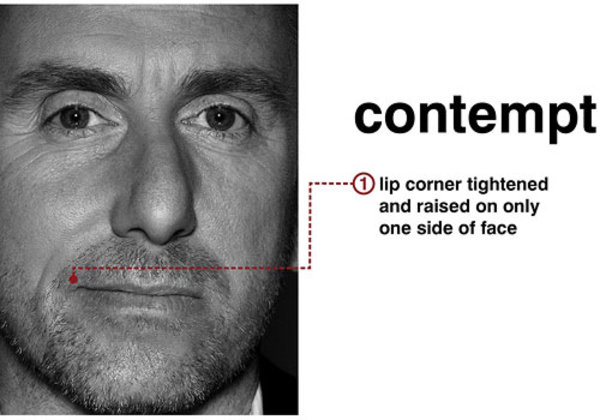
A friend suggests that my recent arguments against the moral status of contempt ignored an important role it plays in policing our moral community. The concern is that if we cannot feel (and expect others to feel) contempt for someone like Bernie Madoff, then we will lose the morally instructive value of punishment. If we…
Ever since the markets became front page news, I’ve been caught in some sort of economics blog vortex. At this point, most of my reading is no longer directed towards macro-economic issues and institutional critique, but rather focuses on the economics department at George Mason. The problem is that it seems like these people really…
[caption id=”attachment_3357″ align=”alignright” width=”484″] “Hey, look at those assholes over there. Ordinary fuckin’ people. I hate ’em.” -Repo Man[/caption] In this post, I want to argue that disdain, contempt, and scorn have no moral place in our emotional lives. In short, my claim is that these emotions are immoral because they target persons and not…
I’ve been having a debate on a friend’s Facebook page about the value of Martha Nussbaum’s work (I’m a fan) and serendipitously I found this post on “appreciative thinking” via Tyler Cowen . It’s a kind of inverted critical thinking, from Seth Roberts: When it comes to scientific papers, to teach appreciative thinking means to…
So in the last post, I showed how the initial versions of Christian judgment were remarkably modest and fallibilist with regard to other people. This makes a certain amount of sense, since Augustine was attached to a fairly rationalist theology, and always gave both doctrinal and basically ethical reasons for his judgments. (For instance, with…
In the Confessions , Augustine argues that the capacity to judge is a capacity only available to those who have come to know God: “… we become new men in the image of our Creator. We gain spiritual gifts and can scrutinize everything —everything, that is, which is right for us to judge— without being…