Many of my own fellow-travelers police progressivism in a way I sometimes find frustrating. It is de rigeur to chastise neoliberals and technocratic moderates for their lack of radicality. My work tends towards the technocratic/participatory divide around how policies should be made, and so I often don’t have strong policy preferences unless I’ve researched a…
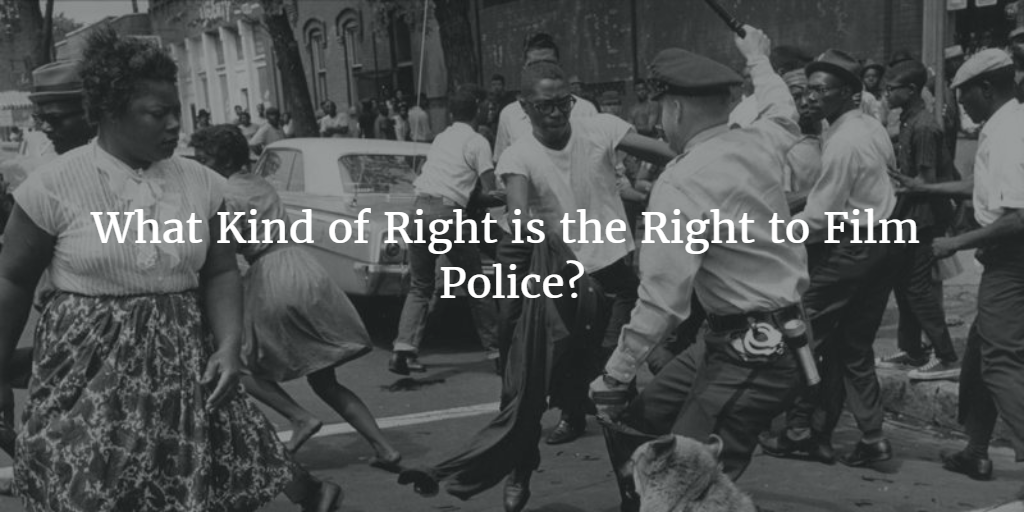
It is pretty clear to me that there ought to be some kind of right to photograph and film police, especially arrests. And yet, at least one US District Judge Finds no First Amendment Right to Film or Photograph Police : We find there is no First Amendment right under our governing law to observe…
I have written here repeatedly about the problems with person-oriented reactive attitudes and character skepticism. But recently I came across the work of the psychologist Albert Ellis , whose work is at the intersection of therapeutic psychology and philosophy. His work on self-esteem and person-oriented assessment suggests an interesting new direction for the general insight…
Susan Brison’s Aftermath ends twice: the final chapter discusses her various efforts to retell the story of her brutal rape and attempted murder (she calls it “attempted sexual murder.”) And ends with her final, planned retelling to her son when he is older: “Tragedy,” Wittgenstein wrote, “is when the tree, instead of bending, breaks.” What…
Even mildly deliberative moments like the Iowa caucuses can lead to surprising outcomes because a very different public (no longer hypothetical) is constituted by the caucus form.
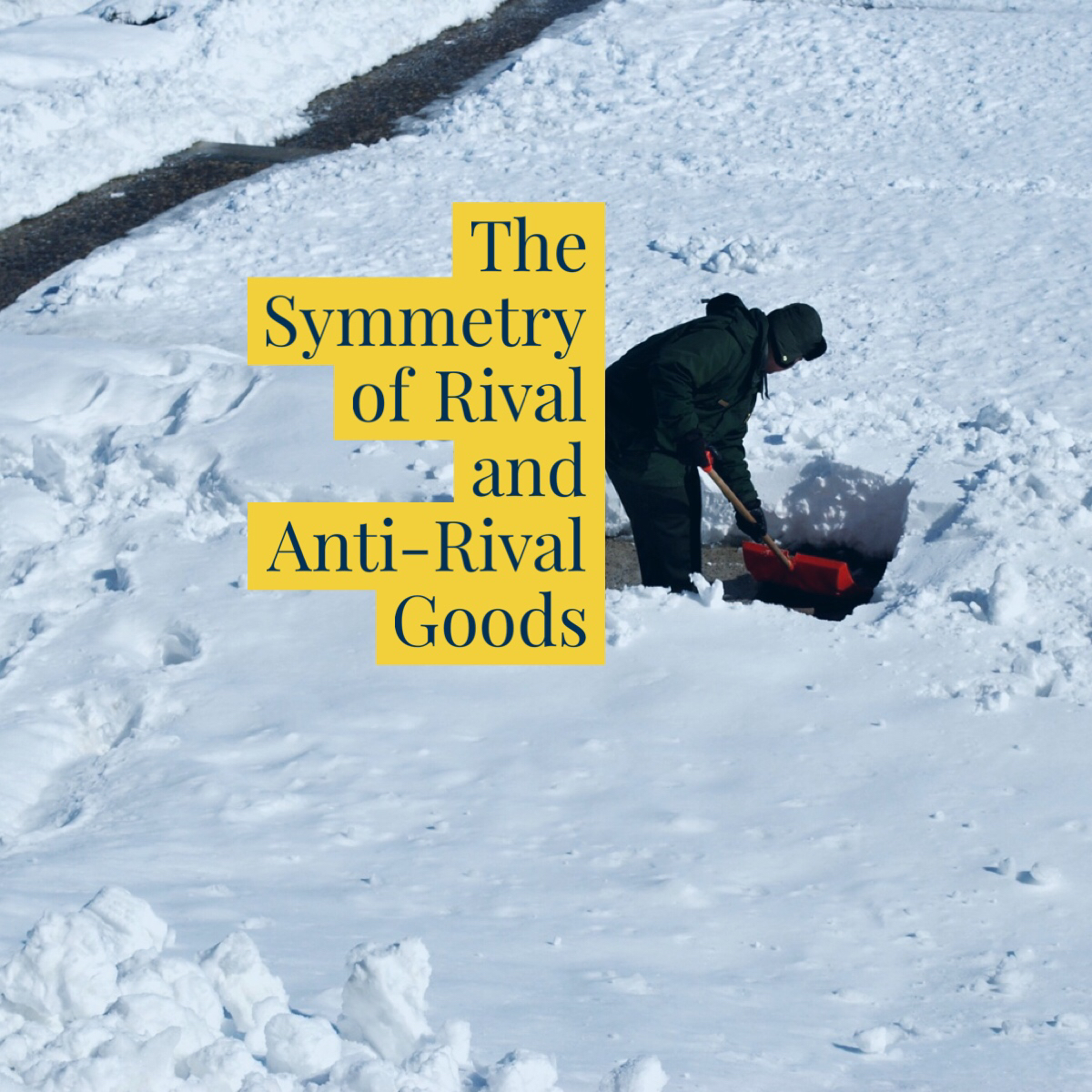
A shoveled sidewalk is a strange sort of common pool resource: it’s not like fisheries or irrigation where the more one person uses the resource, the less there is for others. That is, it’s not precisely “rivalrous,” one of two conditions required for a common-pool resource to flourish. In fact, the more people shovel their sidewalks, the better off each individual with a shoveled sidewalk is. This is what economists call “anti-rivalry” and is frequently linked to network effects.
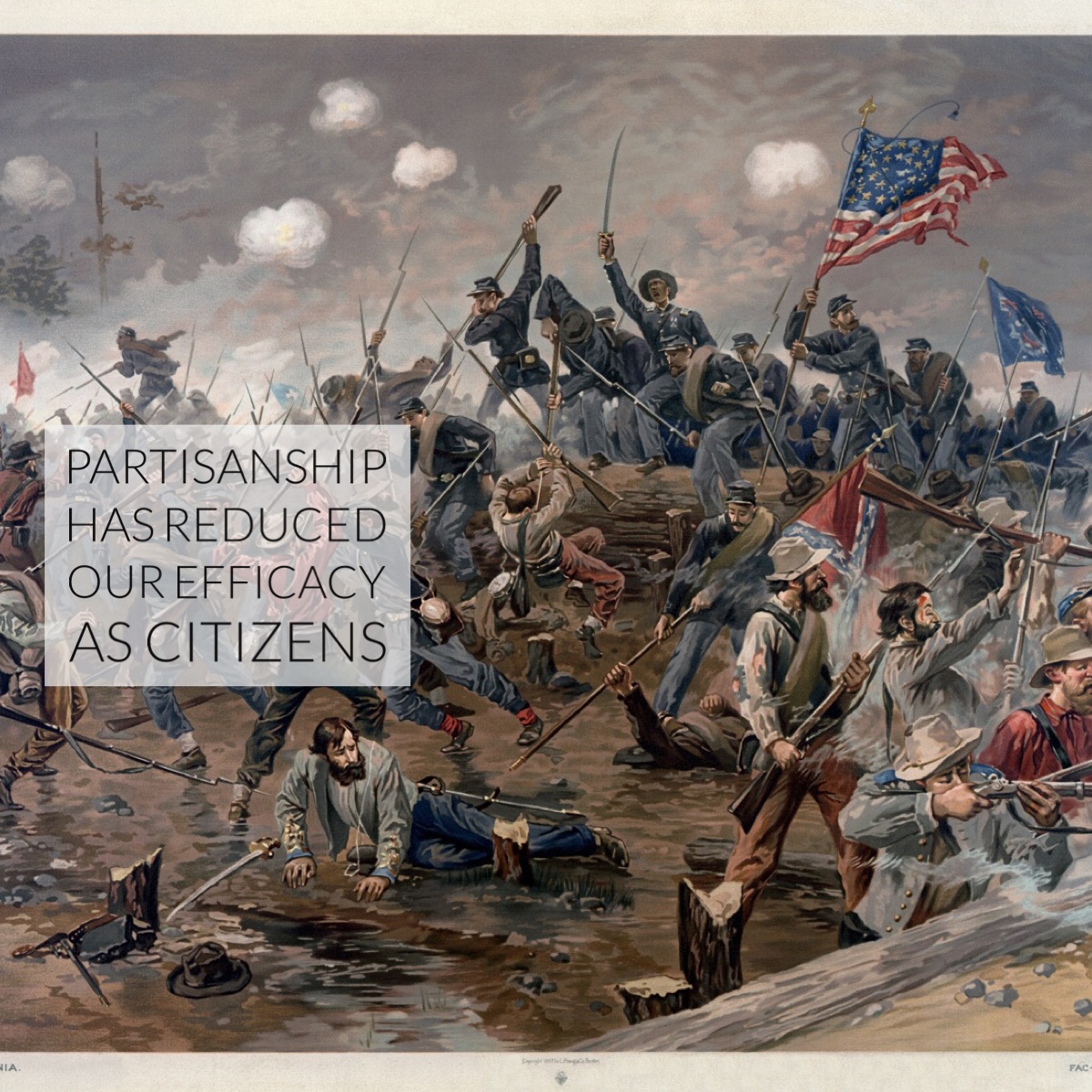
I’ve been thinking a lot about the new evidence that partisan distrust and even hatred now trumps racial hatred. Consider the now-famous Iyengar/Westwood study, ” Fear and Loathing across Party Lines: New Evidence on Group Polarization .” Iyengar and Westwood showed that partisan identification has ceased to be a wholly ideological or instrumental self-description. It’s…
This is the direction I wish philosophy was headed, making sense of the problems at the intersection of our lives, our political economy, and our self-deception.
I do think those are basically the right judgments about fossil fuels: they are awesome, we should be glad that they existed, and it really sucks that we’re going to be giving them up, but it’s time to take action. That said, it’s not clear why I can’t also feel: Anger that providence does not supply as good a solution without the costs. Resentment that those who have profited from fossil fuel extraction are willfully denying the evidence that we must change. Frustration that scientific consensus does not bind more of my fellow citizens and their elected representatives. Suspicion of the ways that our current interests cause us to downplay the risks and need for resignation and determination. Those seem perfectly rational to me, too. And we might not be able to hold all those emotions in our mind at the same time, and thus we find that we’re unable to capture the state of perfectly neutral ambivalence that Caplan here suggests is a prerequisite for being considered rational.
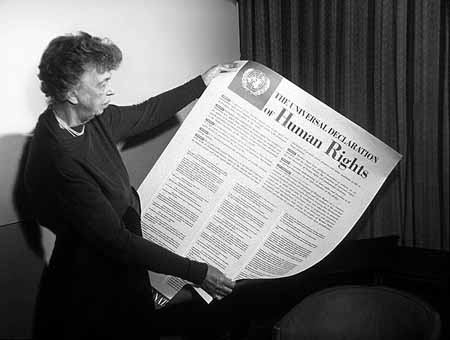
On my view, human rights aren’t political conversation stoppers, they’re a prerequisite for certain kinds of political conversations at all. Indeed, human rights are so foundational to certain kinds of political conversations that many people lay claim to them even where they don’t exist so as to begin or continue a difficult political conversation.