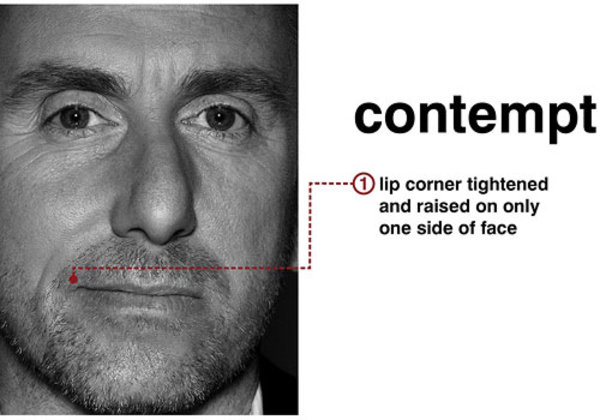
In this post, I want to argue that disdain, contempt, and scorn have no moral place in our emotional lives. In short, my claim is that these emotions are immoral because they target persons and not…
I understand why folks do retrospective blog posts and best-of lists in early December, and I certainly benefit from it as I’m thinking about Christmas gifts, but it seems to violate the spirit of the list or retrospective itself to start before the year or decade is done. If this is the *only* lesson that…
I’ve been having a debate on a friend’s Facebook page about the value of Martha Nussbaum’s work (I’m a fan) and serendipitously I found this post on “appreciative thinking” via Tyler Cowen . It’s a kind of inverted critical thinking, from Seth Roberts: When it comes to scientific papers, to teach appreciative thinking means to…
Can Liberals Take Their Own Side in an Argument? (PDF) Robert Talisse takes on Robert Frost and Mozert v. Hawkins . Epistemic dependence is unavoidable because every individual has limited cognitive resources. However, this dependence in itself is not a bad thing; great stores of knowledge and information that could not be produced by a…
In a recent report on British policing , Denis O’Connor criticized the growing use of paramilitary policing in the UK: “British police risk losing the battle for the public’s consent if they win public order through tactics that appear to be unfair, aggressive and inconsistent,” he said. “This harms not just the reputation of the…
When I am feeling thoughtful and imprecise, I like to say that philosophers embrace disagreement and pluralism because we are not, ultimately, ‘friends of wisdom’: we are practitioners of an ancient art of ‘wise friendship’ in which our disagreements and disputes are understood as a part of a larger project of amicability or relation. We obsess over…
Dr. J responds on moral realism. It appears that our dispute focuses on the role that ‘the world’ plays in verifying our moral propositions. Dr. J is right to note that I’ve made an important and potentially dispositive claim in asserting that agent-neutrality requires that one’s account be “either verified by the world or not.” However, I…
David Brooks writes : The disadvantage [of Obama’s style of governance] is the tendency to bureaucratize the war. Armed conflict is about morale, motivation, honor, fear and breaking the enemy’s will. The danger is that Obama’s analytic mode will neglect the intangibles that are the essence of the fight. It will fail to inspire and…
So I’ve been writing the last few days on a number of only tenuously related themes: cruelty and torture , probability and prediction markets , testability, middle-range theories, and moral realism . Today I’m going to try to draw these themes together and point to a couple avenues for further discussion. Obviously, it’s important to…
I’m just reposting a couple of links from Metafilter’s Optimus Chyme : Everything You Never Wanted to Know about the American Prison-Industrial Complex Prison Nation Don’t click through if you were hoping to maintain your post-holiday glow. This is the sort of thing I hoped would be on the agenda by now. For all the…