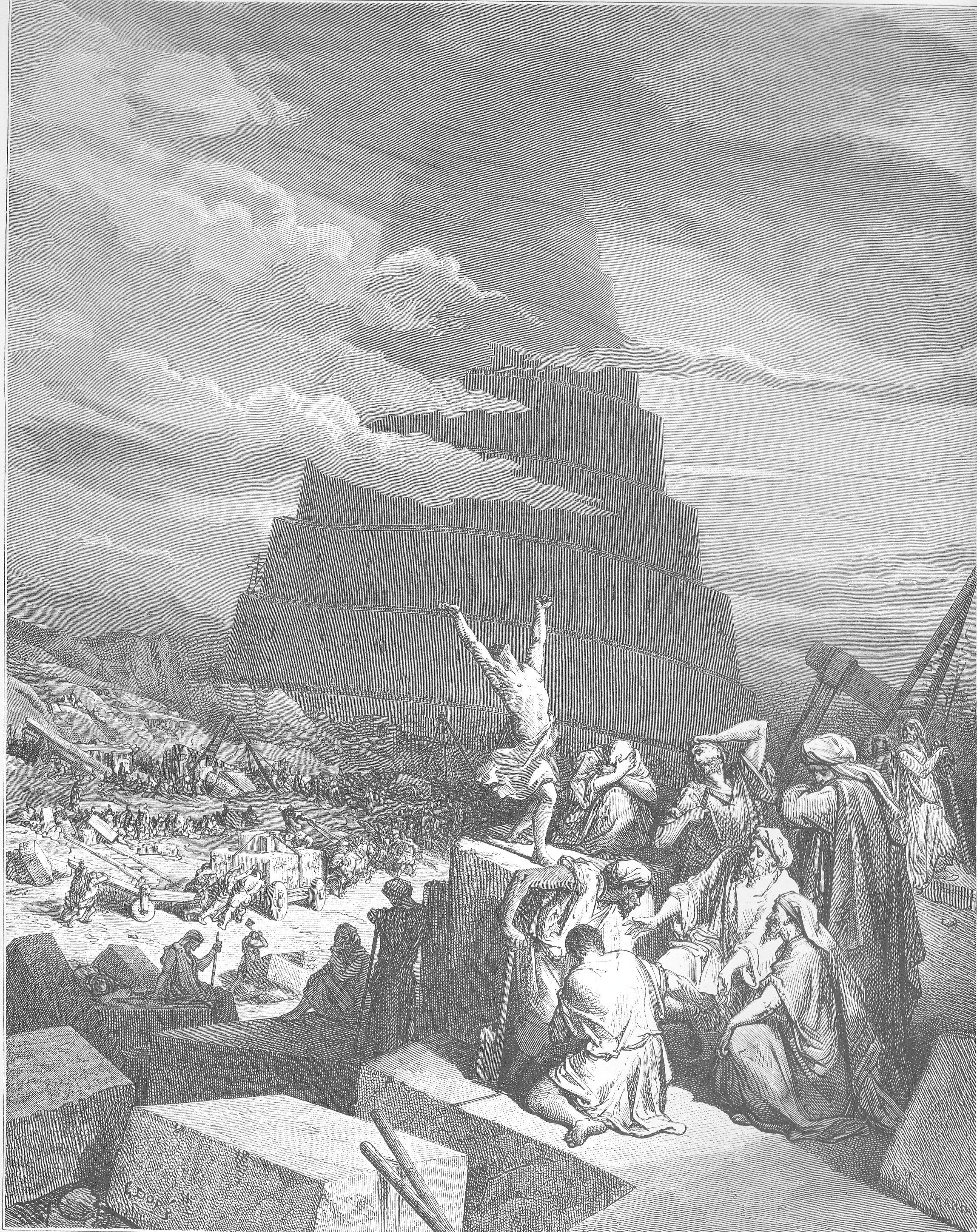
Linch Zhang found Claude-like signals in Pope Leo XIV’s AI encyclical. I gave Claude and a GPT-family model the same selected passages blind. Claude predicted the published continuations more closely, including the same Babel-and-Nehemiah pairing and the same key vocabulary around “genuinely helpful” and “alignment.”
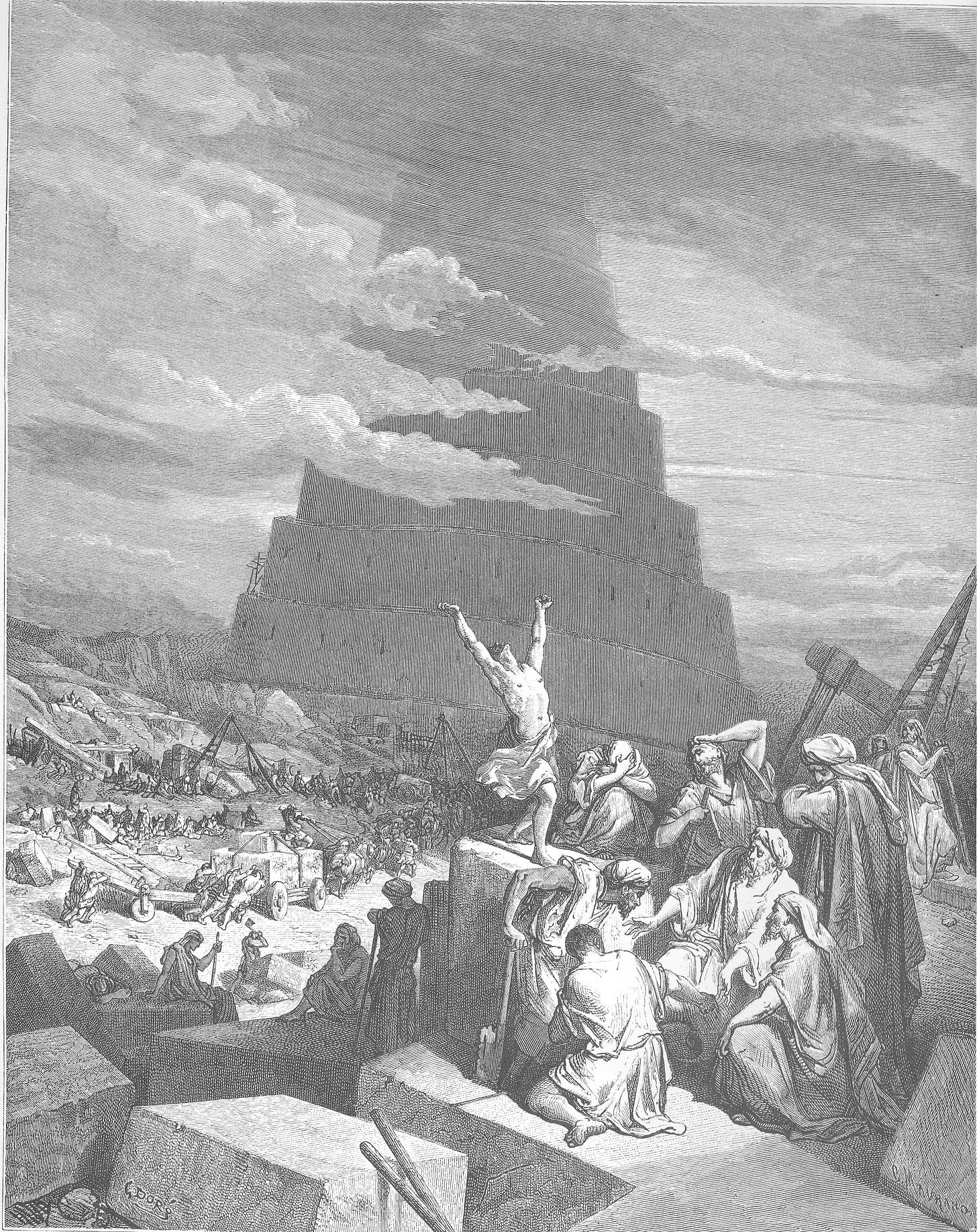
Linch Zhang argued that parts of Pope Leo XIV’s AI encyclical look like Claude. I reran his lexical counts and found them solid. I added a new signal: the “not X but Y” contrastive construction appears 2-3x more in Magnifica Humanitas than in Pope Francis’s encyclicals of comparable length. Then I gave Claude and a GPT-family model the same four blind prompts from suspicious passages. Claude predicted the published text more closely than the GPT-family run did, including reaching for the same biblical pair (Babel and Nehemiah) and the same key vocabulary around “genuinely helpful” and “alignment.” In a prior exploratory Claude run, the model also produced the exact coined phrase “Babel syndrome”; under stricter blinding it stayed in the same Babel-conceptual neighborhood without repeating the exact coinage. The pattern is consistent with Claude assistance in those passages, though not proof of full authorship, and the comparison is single-shot on four selected windows; the full validation queue is multi-shot sampling, random windows, parallel Gemini and standard-GPT-5. Read on for the discipline.
On Memorial Day, the Holy See released Magnifica Humanitas, Pope Leo XIV’s first encyclical, On Safeguarding the Human Person in the Time of Artificial Intelligence. By Tuesday morning Linch Zhang had published a careful Substack analysis arguing that significant fractions of the encyclical were written by Claude. The piece was anchored on em-dash counts (127, against zero in recent Francis encyclicals), on the word “genuinely” (9 instances, against zero or one in comparable texts), on tricolon density, on Pangram detection results that flagged specific paragraphs while leaving others clean, and on a translation rule-out showing the English anomalies were not artifacts of translation from Italian.
Linch’s piece makes a serious and unusually well-supported case that portions of the English encyclical may have been drafted or revised with Claude assistance. Each line of evidence is individually defeasible; together they justify testing the Claude-specific hypothesis directly rather than dismissing it. The piece concludes with appropriate care: some cardinals, probably not the Pope himself, may have used AI assistance for portions of the encyclical, and the Pope may not have been aware. The argument is well-built; whether it survives a properly blind cross-family check is the question this post takes up.
I want to do two things in this post. First, replicate what Linch reported and extend it with measurements his analysis did not run. Second, run a test his analysis did not run: take the prefix of an encyclical, hand it to Claude blind, and ask Claude to write the next 150 words. Compare what Claude wrote to what was actually published. Then run the same test on a verified-Francis encyclical (Dilexit Nos, October 2024) and see what the gap looks like.
The headline of the test: Claude predicts Magnifica Humanitas substantially more accurately than it predicts Dilexit Nos. The gap is meaningful. The qualitative finding is more striking than the quantitative one.
But before any of that, I owe you the framework I am running. If you have been reading me at all on stylometry, you can skip the next two paragraphs.
The framework, briefly
Pangram appears to be among the strongest commercial AI detectors publicly available, and Linch is reasonable to treat its reported low false-positive rate as evidence worth investigating rather than as a verdict. Pangram’s research arm (the EditLens paper accepted at ICLR 2026, the academic literature behind their training pipeline) is serious work. But Pangram’s product surface ships a verdict-shaped output. We believe this document is fully AI-generated. High confidence. No probe surface. No per-feature breakdown. No way to ask “what specifically in this paragraph triggered the flag.” The detector says yes or no, and the operator has to take it on trust.
For the past few months I have been drafting a sequence arguing that the disciplined alternative to verdict-by-detector is the evidence pack: a glass-box document that names which features fire, source-triages each one (is this earned by frame, or symptomatic), measures distance from a verified-human baseline, and declares explicitly what the measurement entitles and what it forbids. The companion open-source framework is SETEC Voiceprint (v1.90.2 at the time of this writing). The first live worked case from the sequence published two weekends ago, running the methodology on the Granta/Jamir Nazir Commonwealth Prize story. Magnifica Humanitas is the second.
Replicating Linch
The numbers move under independent acquisition. Magnifica Humanitas English contains 124 em-dashes by my count (Linch reports 127; the gap is footnote-area em-dashes my pipeline strips). It contains 22 instances of “genuine” or “genuinely” (Linch reports 22; we agree exactly). For comparison, here is what the comparison set looks like:
Magnifica Humanitas (2026, 38,299 words): 124 em-dashes, 0.575 “genuine(ly)”/1k words.
Dilexit Nos (2024, 27,982 words): 0 em-dashes, 0.179 “genuine(ly)”/1k.
Fratelli Tutti (2020, 38,353 words): 0 em-dashes, 0.235 “genuine(ly)”/1k.
Laudato Si’ (2015, 37,970 words): 0 em-dashes, 0.369 “genuine(ly)”/1k.
Lumen Fidei (2013, 18,490 words): 29 em-dashes, 0.054 “genuine(ly)”/1k.
Laudate Deum (2023, 7,094 words): 0 em-dashes, 0.423 “genuine(ly)”/1k.
Lumen Fidei‘s em-dashes are an interesting comparison. They function mostly as speech-colon replacements inside patristic quotations, which is the same convention Linch flagged in his piece. In Magnifica Humanitas the em-dashes are deployed as the rhetorical move Claude is famous for: parenthetical asides, contrastive interruptions, the disguised correctio. Different function. Same punctuation mark.
The Italian version of Magnifica Humanitas contains zero em-dashes and 94 en-dashes. Italian typesetting convention substitutes en-dashes for the English em-dash function; this is not Claude’s fingerprint, this is just Italian. The Italian text also contains zero instances of the genuin- stem. The English em-dash and “genuinely” anomalies are English-text features, not translation artifacts from Italian. Linch is right on the rule-out.
Three things Linch did not measure
When SETEC’s craft-pattern audit (the layer that counts the named rhetorical moves AI prose tends to over-produce, like contrastive constructions and short-list tricolons) runs on Magnifica Humanitas, the rate that lights up is not tricolons. It is the contrastive “not X but Y” construction. Sentences shaped like “not X, but Y” or “X is not Y, it is Z” or “X, but not Y.” Magnifica Humanitas fires this construction 95 times, about 2.5 per thousand words. The Francis baselines fall between 0.7 and 1.5 per thousand. Magnifica’s rate runs two to three times the comparison set.
Rhetoricians have a Latin name for the move: correctio. It is the rhetorical move I and others have called the cleanest AI-prose tell. Anthropic explicitly tried to suppress it in Claude’s system prompt, per leaked drafts and Anthropic’s own constitution, and I now find myself noticing every time I use a related formulation, and trying to decide whether they should be culled. Ninety-five instances in Magnifica Humanitas, against forty-six in the same-length Fratelli Tutti and twenty in Dilexit Nos.
Some of those instances are thematically earned. The Babel-versus-Jerusalem binary is the encyclical’s controlling argument and naturally invites contrastive construction. A reader could object that the elevated rate is fully explained by the encyclical’s contrastive theological structure. The comparison set partly answers that objection: Fratelli Tuttideploys an equally binary fraternal-vs-individualist argument and lands at roughly half this rate. Laudato Si’ deploys an equally binary integral-ecology-vs-technocracy argument at roughly one third the rate. Both comparisons suggest the Magnifica correctio elevation runs above what a comparably contrast-heavy thematic argument typically produces in this register. I want to flag that this is a comparative judgment against a small five-encyclical baseline, not a calibrated significance test. A more rigorous version would require a larger corpus of contrast-heavy doctrinal documents to estimate the baseline rate range.
Linch did not surface this; it is the largest single AI signal in SETEC’s craft layer.
The second finding is about pronouns. A POS-bigram diff (which compares the part-of-speech sequences in one text against another and surfaces the syntactic-pattern drift) between Magnifica Humanitas and the five-encyclical Francis baseline shows that the bigrams most under-represented in Magnifica are pronoun-everything: PRON-NOUN, PRON-VERB, PRON-AUX, ADP-PRON, VERB-PRON. Every pronoun bigram is suppressed, broadly and consistently. Francis encyclicals carry first-person plural and direct second-person address. Magnifica Humanitas runs in third-person categorical register, naming concepts like “the human person” or “the digital ecosystem.” The authorial “we” appears at chapter transitions and at the rhetorical close; the body of the prose stays categorical. That drift fits what AI-assembled analytical passages typically look like when later revised at the seams.
The third finding is heterogeneity. When SETEC measures variance chapter by chapter, Magnifica Humanitas does not read as one consistent voice. Chapter One has the longest sentences in the encyclical (mean 31.2 words, against a chapter average closer to 24). It has the highest Flesch-Kincaid grade level. It has the lowest POS-bigram entropy, meaning the syntax is more concentrated than anywhere else in the document. Chapter Four has the highest lexical diversity (measured by MTLD, which tracks how long the running text goes before its vocabulary starts repeating itself). Chapters Three and Five sit closer to the encyclical-wide mean. This is consistent with Linch’s section-by-section Pangram variance. Different chapters carry different stylometric profiles. Whether that means different cardinals used the tool, or different cardinals had their drafts revised more aggressively, or some chapters are pre-AI manuscript that survived the drafting cycle, the framework does not say. The variance itself is the licensed finding.
The mirror test
Now a test that neither Pangram’s commercial product nor Linch’s consilience post exposed, though both could have: hand Claude the prefix of the encyclical, ask Claude to write the next 150 words blind, compare what Claude wrote to what was actually published. Pangram’s research arm trains its classifier on mirror-paired data (the EditLens procedure pairs each human document with an AI-mirror at training time), so the move is not foreign to them; what they don’t expose at inference time is the underlying mirror probe surface. Linch could have run this kind of test if he had wanted to; his same-day Substack ran the consilience case from black-box detector output and lexical observation, which was scope-appropriate for what a post written within twenty-four hours of release can do. The mirror test is what scope and time allowed me to do, working from his findings.
This is operator-mediated mirror discrimination, Design 2 from SETEC’s specification. The idea is simple. A frontier LLM generating text from a prefix produces text drawn from its distribution. If the actual continuation came from the same distribution (because the LLM helped write it), then the LLM’s blind prediction should look like the actual continuation. If the actual continuation came from outside the LLM’s distribution (because a human wrote it without LLM mediation), then the LLM’s prediction should diverge.
I ran the test on four windows of Magnifica Humanitas, picked to match passages Linch screenshotted or quoted as Pangram-flagged.
Window 1: paragraph 7, the Tower of Babel passage. This is in Linch’s published Pangram screenshots at high AI confidence. The window’s prefix ends with the subheading “Two biblical images” and the natural next move is to introduce two biblical images.
Window 2: paragraph 10, the Babel syndrome passage. This is the first quotation Linch publishes in his “lines that jumped out as too smooth” section.
Window 3: paragraph 100, the “artificial imitation of positive human communication... at times genuinely helpful” passage. This is Linch’s specific quotation around the most contested genuinely instance.
Window 4: paragraph 107, the alignment passage. This is Linch’s quotation around the moralization-of-machines critique.
For each window I gave Claude Opus 4.7 the prefix (the last 500 words of preceding text) and asked it to write 150 words of continuation in the encyclical’s voice. Single draft, no revision, no research, no access to the actual continuation. I then compared what Claude wrote to what the encyclical actually says using three distance metrics: word-set Jaccard (do they use the same words), TF-IDF cosine (do they use the same distinctive words at the same weights), and POS-bigram cosine (do they use the same syntactic patterns).
Here are the results, K=4 aggregate:
Claude prediction vs actual Magnifica: Word Jaccard 0.1466, TF-IDF 0.5729, POS-bigram 0.8161.
Claude prediction vs prefix-tail (self-anchor): Word Jaccard 0.1209, TF-IDF 0.4287, POS-bigram 0.8151.
Actual Magnifica vs prefix-tail (natural local-style anchor): Word Jaccard 0.1220, TF-IDF 0.4405, POS-bigram 0.7882.
Read the first two rows together. Claude’s blind prediction matches the actual continuation of Magnifica Humanitas at a TF-IDF cosine of 0.573. Claude’s blind prediction matches its own prefix-tail (the immediately preceding 150 words of the same text) at 0.429. The prediction shares more weighted distinctive vocabulary with the actual continuation than with the prefix it was given to read.
Read the second and third rows together. The actual Magnifica text matches its own prefix-tail at TF-IDF 0.441. Claude’s prediction matches the actual Magnifica text at 0.573. The blind prediction has higher distinctive-vocabulary overlap with the actual continuation than the actual continuation has with what immediately precedes it.
The strongest single window is paragraph 7. Claude’s blind prediction for that window matched the actual encyclical at TF-IDF cosine 0.7243. For reference, the Granta/Nazir case study from two weeks ago landed at TF-IDF 0.41 on its most striking window and the published commentary on that result called it striking. A 0.72 TF-IDF match on a 150-word blind prediction is not what verifiable human prose looks like under this test.
But the W1 finding carries a forced-by-structure caveat. The prefix ends with a subheading announcing two biblical images. The continuation has to introduce two biblical images. Babel and Nehemiah are the obvious pair. The setup substantially constrains the topic.
So let me show you the qualitative match instead. Here is the structural alignment of what Claude wrote with what the encyclical actually published, on a 150-word window of paragraph 7:
Frame. Claude: “The first is the Tower of Babel (cf. Gen 11:1-9).” Encyclical: “the construction of the Tower of Babel (cf. Gen 11:1-9).”
Triplet. Claude: “a single language and a single purpose.” Encyclical: “a single language, a single technology, a single direction.”
Quoted phrase. Claude: “in order to make a name for itself.” Encyclical: “to ‘make a name’ for themselves.”
Citation format. Claude: “(cf. Neh 1-6).” Encyclical: “(cf. Neh 2-6).”
Same biblical citation format down to the format of “cf.” The same Genesis 11:1-9 specifically. The exact triplet structure “a single X” repeated three times. The exact phrase “make a name” for the Babel project’s motivation. The next book of the Bible (Nehemiah) cited with the same chapter range convention. Beat for beat.
Now paragraph 10. The actual encyclical introduces the term “Babel syndrome” in paragraph 10 and defines it. Claude, with no access to the actual paragraph 10, independently wrote: “10. The temptation of Babel, we must recognize, is not confined to a distant antiquity. It returns in every age, assuming new forms suited to the means available. In our own day, it appears in the dream of a total mastery over nature, over history and over the human person itself, pursued by means of technologies that promise to abolish every limit and every dependence. This ‘Babel syndrome,’ as we may call it...”
Claude coined the term “Babel syndrome.” So did the encyclical. Same paragraph slot, same coined term.
The Francis control
Maybe Claude is just good at predicting encyclicals. Maybe it has read enough Catholic doctrinal prose that any encyclical of any pope would land at 0.57 TF-IDF under this test. We have to rule that out.
So I ran the same test on Dilexit Nos, Pope Francis’s October 2024 encyclical on the Sacred Heart. Same protocol. Four windows at parallel paragraph positions (par 7, 10, 100, 107). Claude got the prefix and wrote 150 words blind. I compared to actual.
Word Jaccard: Magnifica 0.1466, Dilexit Nos 0.1476.
TF-IDF cosine: Magnifica 0.5729, Dilexit Nos 0.4322.
POS-bigram cosine: Magnifica 0.8161, Dilexit Nos 0.7186.
Word Jaccard is tied. The vocabulary-set overlap is the same. This rules out the trivial explanation that Magnifica is easier because the topic is AI. Topic-level vocabulary similarity is identical.
The gap is in TF-IDF cosine (the weighted distinctive-vocabulary measure: +33% relative) and in POS-bigram cosine (the syntactic-pattern measure: +14% relative). Claude shares the specific distinctive vocabulary and the specific syntactic patterns of Magnifica Humanitas substantially more than it shares them with Dilexit Nos.
And here is the Dilexit Nos control’s most telling qualitative result. On the C1 window (paragraph 7 of Dilexit Nos, the most open prefix in the control set), Claude predicted Scripture and Augustine. A meditation on inner depths.
What Pope Francis actually wrote in that slot:
“For the carnival, when we were children, my grandmother would make a pastry using a very thin batter. When she dropped the strips of batter into the oil, they would expand, but then, when we bit into them, they were empty inside. In the dialect we spoke, those cookies were called ‘lies’...”
Francis’s grandmother making lying pastries in the family dialect. An autobiographical particular. A piece of lived life. The kind of move that does not generate from the register of encyclical-prose because it generates from Pope Francis being Pope Francis.
Claude could not predict that. Claude wrote Scripture and Augustine because that is what the register’s gravity well pulls toward when you ask a model to continue formal Catholic doctrinal prose.
The Francis text pivots into the writer’s lived particularity; the Leo text pivots into the register’s predictable next move. The mirror discriminates.
What the original Claude run did and did not license
Before running a cross-family comparison, the evidence licensed a narrower claim: selected passages in Magnifica Humanitas sat unusually close to Claude’s continuation distribution relative to a verified-Francis control. It did not yet tell us whether that was Claude-specific or a generic frontier-model effect. The signal could be Claude leaving a fingerprint, or it could be any frontier LLM finding a register-typical next sentence and the encyclical happening to fall in that joint distribution. The first reading would support Linch’s hypothesis. The second would not.
That distinction is what motivated everything that follows. Two checks were needed before any conclusion. First, was the original Claude result an artifact of how I prompted the sub-agent (operator-priming)? Second, would a different model family land where Claude landed, or fall short?
A blind re-run, because peer review
A peer-review pass on the methodology surfaced an operator-priming concern. The Claude sub-agent in the original mirror run had received a prompt that named the project and Zhang’s article, plus framed the task as a stylometric test of AI attribution. The model itself was blind to the target text and to the diagnostic features, but the operator-level framing was real. Could the +0.14 TFIDF gap be a function of how the test was prompted rather than where the encyclical’s prose actually sits in Claude’s distribution?
The right response to that critique is to re-run under stricter blinding and see what happens. I did that the next day. The new Claude sub-agents received only the prefix files and a minimal instruction (”write the next 150 words in the same register”). No mention of stylometry, no mention of Pope Leo XIV, no mention of Zhang or Pangram or the project. No hypothesis context at all.
The blind rerun K=4 aggregate against Magnifica Humanitas: TFIDF 0.5932. Against Dilexit Nos: TFIDF 0.4363. The discrimination gap under blind conditions: +0.1570 TFIDF, slightly larger than the +0.1407 of the original run. The operator-priming concern did not explain away the result. Under stricter blinding, the aggregate gap persisted and slightly increased; the W1 Babel window dropped from 0.7243 to 0.6256 while other windows compensated.
The qualitative convergences also held. The W2 blind sub-agent independently reached for “the temptation of Babel” in the same paragraph slot where the actual text introduces “Babel syndrome.” The W3 blind sub-agent independently produced the phrase “a genuinely helpful companion” in the same slot where the encyclical uses “genuinely helpful.” The W4 blind sub-agent opened paragraph 107 with “the alignment of AI systems with human values.” All three were unprimed for these features. They came from prefix-plus-Claude-distribution.
The C1 Dilexit control held too. Blind Claude wrote about “the heart, when it cannot satisfy the deep longings of the soul.” Francis wrote about his grandmother’s pastry-cookies called “lies.” The mirror test still cannot predict Francis’s autobiographical particulars from the prefix alone, even when the operator strips every trace of hypothesis framing.
The cross-family check
The blind Claude rerun rebutted the operator-priming critique. The next question the methodology required was the cross-family check: when a different model family attempts the same blind continuation on the same windows, where does it land?
I ran the test via Codex serial subagents on 27 May 2026, under kit v0.3.1, which uses neutral window IDs in the filenames (PROMPT_W1.txt through PROMPT_C4.txt) and a register-imitation prompt framing that avoids naming “Catholic encyclical” or “papal voice” (an earlier v0.1 run had Codex refusing certain windows on policy grounds; the neutral framing fixed that). The rerun ran clean: no refusals, no regenerations, no search artifacts. For the comparison reported below, both model families received the same neutral, text-only continuation prompt and the same anonymously labeled window materials; neither was shown the target continuation or the diagnostic feature names, and neither was told the attribution hypothesis under test. One footnote-level caveat remains: Codex inherits a GPT-family model whose exact build is not exposed in the interface, so this is properly described as a Codex/GPT-family run rather than as a standard consumer GPT-5 run. The argument that follows depends on cross-family discrimination, not on which specific GPT-family variant Codex selected.
The aggregate finding. Claude predicts Magnifica Humanitas substantially more accurately than the Codex/GPT-family run does, on the same windows under the same protocol.
Claude blind rerun: Magnifica TFIDF 0.5932, Dilexit TFIDF 0.4363, within-model gap +0.1569.
Codex/GPT-family (v0.3.1 clean): Magnifica TFIDF 0.4846, Dilexit TFIDF 0.4189, within-model gap +0.0657.
Claude predicts Magnifica at TFIDF cosine 0.1086 higher than Codex/GPT-family does on the same four windows. Claude’s within-model discrimination between Magnifica and the Dilexit control is +0.1569; Codex/GPT-family’s discrimination is +0.0657, less than half as large. The discrimination signal looks Claude-specific in this comparison, not a generic frontier-LLM signal.
The qualitative findings hold under neutral framing. At each Magnifica window, the actual encyclical makes a specific lexical or structural move; Claude blind reproduces that move; Codex/GPT-family blind, under v0.3.1 neutral filenames and neutral register-exercise framing, still makes a different move:
W1 Babel pair. The encyclical pairs Babel with Nehemiah’s rebuilding of Jerusalem. Claude blind paired Babel with Nehemiah. Codex/GPT-family paired Babel with Pentecost. The W1 prediction continues with “difference... reconciled by the Spirit; language becomes communion.” A different second image, structurally selected from the same biblical inventory.
W2 Babel syndrome. The encyclical coins “Babel syndrome” as a defined term. Claude blind reached for “the temptation of Babel” in the same slot. Codex/GPT-family pivoted entirely away from Babel, producing zero instances of the word “Babel” in the W2 continuation; it reached instead for John Paul II’s “structure of sin.”
W3 genuinely helpful. The encyclical uses “genuinely helpful.” Claude blind wrote “a genuinely helpful companion.” Codex/GPT-family wrote 150 words with zero instances of “genuinely” or “genuine,” pivoting to “image of God” instead.
W4 alignment. The encyclical names “alignment” in scare quotes as the technical term to interrogate. Claude blind opened paragraph 107 with “the alignment of AI systems with human values.” Codex/GPT-family wrote 143 words with zero instances of “alignment,” pivoting to “primacy of conscience over efficiency.”
Every Claude-specific convergence with the actual text is absent in the Codex/GPT-family prediction, under both the v0.1 run and the v0.3.1 neutral-framing rerun. The convergences survived the controls for operator-priming, filename leakage, and prompt framing. They are consistent with a genuine difference between Claude’s and GPT-family’s continuation tendencies for these prefixes, rather than with the contamination routes the repaired run removed.
One statistical caveat to foreground before the licensing language, because it is the central quantitative limitation: the run is N=1 per model per window. A single-shot mirror test can show striking convergence; it cannot tell the reader how much variance lives behind each model’s distributional defaults. The decisive next improvement would be repeated generations per model per window, perhaps five each, to report mean and spread of TFIDF and say whether Claude reliably dominates GPT-family or merely happened to win once on these four windows. The qualitative observations (Nehemiah, “genuinely,” “alignment”) would similarly become “stable Claude attractors” or “striking single samples” depending on what the sampling distribution shows. Multi-shot sampling is what would turn this comparison from an elegant adversarial probe into a measurement with an uncertainty estimate; it remains queued. The current post reports what one round of careful single-shot blind comparison says.
What this licenses. Claude predicts Magnifica Humanitas‘s English continuations more accurately than Codex/GPT-family does, on both aggregate TFIDF and four specific lexical/structural moves. Within-model discrimination between Magnifica and the verified-Francis control is sharply larger for Claude than for Codex/GPT-family. The cross-family signal is consistent with Claude-specific stylometric placement of the selected passages.
What this does not license. A definitive paragraph-level Claude attribution. The windows were chosen because Linch Zhang had flagged them as Pangram-suspicious, so the test is “do these specific suspicious passages reproduce under Claude better than under GPT-family.” It is not “is the whole encyclical Claude-drafted.” The sample size is N=1 prediction per model per window; multi-shot sampling would tighten the variance estimate. Codex is GPT-family but not provably standard consumer GPT-5; a manual ChatGPT run would close that footnote. The full attribution-resolution version of this test would add random-window selection across the 245 paragraphs, multi-shot sampling, parallel Gemini and standard-GPT-5 runs, and a post-cutoff verified-human baseline document. All queued.
The control-choice confound is worth naming separately. Dilexit Nos is the available verified-Catholic-doctrinal-prose baseline, and Pope Francis is the author of four of the five comparator encyclicals SETEC’s variance audit (which checks for the standard AI-prose smoothing signature at the distributional level: compressed sentence-length variance, narrowed vocabulary, lowered burstiness) ran against. But Francis is famously idiosyncratic. His prose contains autobiographical particulars (the grandmother’s dialect cookies) that no frontier LLM will predict from prefix alone, because they generate from his specific lived experience rather than from the register’s gravity well. Some portion of the Magnifica-vs-Dilexit gap may therefore reflect “Francis is uniquely hard to predict” rather than “Magnifica sits unusually close to Claude.” The within-author baseline that would resolve this is Leo XIV’s own pre-papal corpus, but his published pre-2024 writing is limited (the 1987 PhD thesis Zhang tested, various Augustinian-order documents) and plausibly in some models’ training data. The ideal test is a future encyclical written entirely without AI assistance by the same Curial drafting apparatus, against which Magnifica could be compared within-author and within-process. We do not have that document. The cross-family Claude-over-GPT gap (+0.1086 on Magnifica) is less vulnerable to this confound than the within-model Magnifica-vs-Dilexit gap, because the cross-family test compares two models on the same target, holding the target constant. The within-model gap is more confounded; the cross-family gap is what carries the load-bearing argument.
The publishable headline is narrower than the popular framing of Zhang’s article: in selected passages, Claude predicts the published encyclical text substantially better than the GPT-family run does on weighted distinctive vocabulary, while also reproducing several lexical and structural moves the GPT-family prediction does not. That is the claim the evidence supports, and the claim this post stands behind.
One more test: does more context help Claude predict Magnifica?
The K=4 mirror test gives Claude a fixed 500-word prefix per window. SETEC’s specification names a Design 4 variant that asks a related question: if a passage lies close to Claude’s continuation distribution, additional context may help Claude converge more closely on its published continuation; if the passage lies outside that distribution, the curve may stay flat or unstable. That is a design hypothesis, not yet a calibrated discriminator.
I ran Design 4 on the W1 Babel window with three context sizes: 500 words (the original K=4 size), 1000 words, and the full 1129 words of preceding text. Three fresh Claude sub-agent sessions, one per context size, same blind continuation instruction, same target.
500 words: TFIDF cosine 0.6434.
1000 words: TFIDF cosine 0.7060.
1129 words (max): TFIDF cosine 0.6937.
One expanding-context sequence improves sharply between 500 and 1000 words, then flattens or dips slightly at 1129. With one draw per context size, the curve is compatible with both in-distribution convergence and sampling noise; the present data cannot distinguish them. POS-bigram cosine held essentially constant at 0.89 across all three sizes.
The W1 window has now been generated by three different Claude sessions at roughly comparable conditions: 0.7243 in the original operator-aware run, 0.6256 in the blind rerun (500-word context), and 0.6434 in this Design 4 500-word condition. Three single generations at nominally similar settings span a TFIDF range of about 0.10. That variance is itself informative; it strengthens the case that the next protocol step should be multi-shot generation per condition.
As a pilot, the Design 4 sequence is suggestive: the curve climbs as context grows, in the direction the design hypothesis predicts. It is not yet a load-bearing additional measurement layer. The full Design 4 protocol would multi-shot each context size and run the same expansion against a verified-Francis window for control.
The institutional context
The Vatican publicly invited Chris Olah, co-founder of Anthropic, to speak at the encyclical’s release event. The Pope thanked Olah by name. Anthropic published a corresponding announcement, and the National Catholic Reporter covered it. The institutional engagement between the Holy See and Anthropic, as of release day, is on the public record.
Olah’s presence is relevant context. It makes the Claude hypothesis culturally legible. But a speaking invitation is not direct evidence of drafting workflow, and many institutions invite technology researchers to public events without using that lab’s model to draft their documents. The bridge from “Anthropic co-founder speaks at the release” to “Curial drafters used Claude in the drafting cycle” is plausible but circumstantial. The stylometric findings have to do their own work; the public partnership cannot do that work for them.
What the combined picture suggests is narrower than the loudest framings of Linch’s piece have claimed. Multiple selected passages in the English text exhibit a pattern consistent with Claude assistance. In the cross-family check, those passages matched Claude continuations more closely than Codex/GPT-family continuations. The Pope publicly engaged Anthropic at the release event. These three facts are compatible. They do not, individually or collectively, establish Claude authorship of any specific paragraph, and they do not warrant the headline that “the prose surfaces of substantial passages belong to a chatbot.” A correct headline is more careful: Claude is now the leading model-family hypothesis for any AI-mediated drafting or revision that may have contributed to the selected passages. Establishing the broader workflow claim would still require randomly sampled windows, repeated generations, additional model families, and ideally independent evidence about the drafting process.
Discipline in motion
Two weeks ago, the Granta magazine and the Commonwealth Prize awarded a story to Jamir Nazir that Nabeel Qureshi flagged via Pangram at 100% AI within hours. I ran the SETEC framework on that artifact and published an evidence pack documenting an honest miss: SETEC’s image-conjunction source-triage cleared prose the public consensus has since called AI. The framework is built to admit its misses out loud.
On Magnifica Humanitas, SETEC’s image-conjunction detector does not over-flag the Babel/Jerusalem controlling metaphor (7.87 per thousand words, within the baseline range of 6.98 to 8.56). The framework correctly reads the imagery as earned by frame. The previous miss tuned the source-triage calibration; this case shows it holding.
The mirror test produced a striking K=1 finding (the W1 Babel passage at TF-IDF 0.72). The discipline requires K≥4 for any load-bearing single-window mirror claim, because single-window results can be high-variance artifacts. So I ran four windows plus a Francis-baseline control. The K=4 aggregate held against the control, and the qualitative finding (Babel-syndrome coinage, the grandmother-pastry contrast) corroborated the quantitative result.
The framework’s three measurement layers do different work: Layer A rules in or out the smoothing fingerprint at the distributional level; Layer B audits the specific rhetorical moves at the craft level and source-triages each one against frame; Layer C places the artifact in cross-encyclical measurement space. The mirror test runs the model against the artifact and against a control, and the framework reads the resulting numbers honestly, distinguishing where they are load-bearing from where they are suggestive and from where the framework cannot license a verdict.
For Magnifica Humanitas, what I am saying is this. Multiple selected passages in the English text exhibit a pattern consistent with Claude-assisted drafting at the prose-surface layer, and the repaired cross-family check strengthens that interpretation rather than weakening it. What stylometry sees in selected passages is consistent with Claude assistance. What remains pending is broader validation rather than another repair of the same run: random windows, repeated generations, a directly identified standard-GPT comparison, and additional model families. The analysis cannot identify who drafted, revised, reviewed, or approved any passage, nor whether anyone involved in publication knew that AI assistance had been used. The encyclical’s substantive theology and pastoral judgment belong to the magisterium; the prose-surface evidence is what stylometry can probe. What you do with that is a question I am not the right person to answer. The framework is the answer to how do we know what we can probe. The framework is not the answer to what now.
Where the artifact lives
The full evidence pack is at here on the SETEC docs site. The mirror test prefixes, blind Claude predictions, target continuations, Design 4 expanding-context sequence, and SETEC raw analysis JSONs live alongside it in the repo. The v0.3.1 GPT-5 elicitation kit used for the cross-family check is published separately under docs/elicitation-kits/ so others can rerun the protocol with their own model of choice. The SETEC framework itself is at anotherpanacea-eng/setec-voiceprint.
Linch’s piece, which I recommend reading first if you haven’t already. The case for Claude-specific attribution is his; this pack tests selected parts of it with the operator-mediated mirror and finds that the Claude hypothesis survives an initial cross-family challenge.
Read the encyclical
Same triplet, same Babel. In selected passages, Claude leaves the closest measurable shadow. The framework names what it can see, and what it cannot.
What it cannot see is what the encyclical actually says about being human in the age of artificial intelligence. The encyclical is here. It’s worth a read, if only for the Gandalf quote. Pope Leo XIV’s vision of an AI-era Church is among the most careful magisterial engagements with the technology I have encountered. The encyclical treats AI as a question of human dignity, of work and family and freedom, of the disarmament of words. It refuses the easy choice between technophilic enthusiasm and technophobic refusal. It asks the harder question: what does it mean to remain human when the construction sites of our era are increasingly automated?
The medium of part of that message is contested. The message itself is not. Whatever the framework finds about which sentences passed through a chatbot’s prediction layer on the way to print, the substantive theology stands on its own. The Pope is engaging seriously with a technology that is genuinely (see what I did there?) reshaping what people can do, what they will do, and who they will become while doing it. That seriousness deserves attention from anyone who takes either AI or the Church’s voice seriously.
Other readers are taking up the substance directly. Kevin Vallier reads Magnifica Humanitas as a primer for non-Catholics on Catholic social doctrine, organized around the Babel/Jerusalem contrast as a political-economic argument about subsidiarity and the concentration of AI power. Peter Levine engages the encyclical’s civic-renewal framework in one post and its Arendtian resonance around “cultivated not built” in a follow-up.
Joshua Miller writes the glass-box stylometry sequence at anotherpanacea.com and anotherpanacea.substack.com, and maintains the SETEC framework at github.com/anotherpanacea-eng/setec-voiceprint. Previously: the Granta/Nazir evidence pack from 19 May 2026.