
The United States is in the grip of a charismatic strongman. Ten years ago, that sentence got you dismissed as alarmist. People like Masha Gessen and Sarah Kendzior were saying it in 2016; most of the political establishment, myself included, thought the institutions would hold. By 2018, Levitsky and Ziblatt’s How Democracies Die made the comparison respectable among educated readers, but the press still preferred softer language: “norm-breaking,” “unprecedented,” “unconventional.” January 6 moved the Overton window. And then Biden won in 2020, and it looked like we’d been right to dismiss the alarmists. The system worked. The voters fired the strongman.
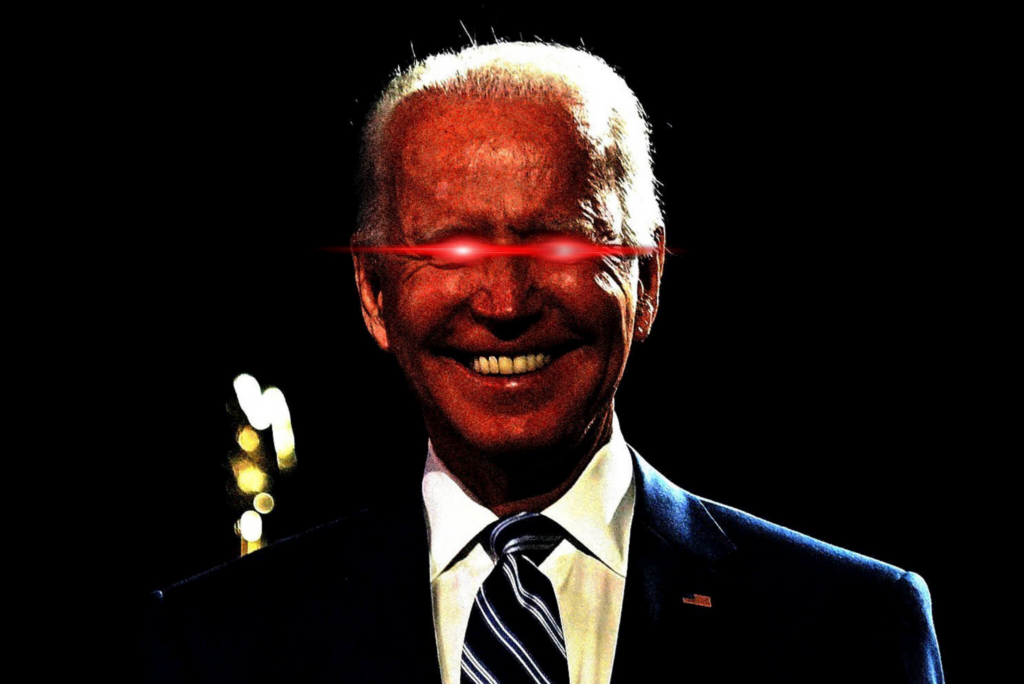
Except something else was happening. “Dark Brandon” started as a joke, but it revealed a craving. Democrats were enjoying personalism while officially opposing it: the aviators, the memes, the swagger. And when Biden couldn’t step aside despite obvious decline, the structural version of that craving became visible. The party couldn’t function without a person at the center. Personalism wasn’t a Republican problem. It was an American one.
By the 2024 campaign, with Trump promising retribution and flirting with “dictator on day one,” the word “strongman” had migrated from academic journals to news copy. By spring 2025, a Bright Line Watch survey of 760 political scientists found a large majority believed the U.S. was moving toward some form of authoritarianism. Levitsky told NPR, “We’ve slid into some form of authoritarianism… We are no longer living in a liberal democracy.”
So the question is no longer whether to use the word. The question is: what usually happens next?
What Should We Fear
What comes next is almost never an immediate Hollywood-style dictatorship. The more common pattern is democratic erosion: politics becomes increasingly personalist, the leader claims to uniquely embody “the real people,” and institutions that can say no get delegitimized, intimidated, packed, or bypassed. Courts, watchdogs, civil servants, independent media, election administrators, universities, civil society. Frantz, Kendall-Taylor, and their collaborators have shown that personalism has been rising across democracies since the early 2000s, and that it correlates with more polarization and a higher probability of democratic breakdown. Frantz, Kendall-Taylor, and Wright’s book-length treatment traces the mechanism through personalist parties specifically: parties that exist to advance a leader’s career lack the incentive or capacity to check that leader’s power. Personalism is measurable, and it’s getting worse.
After that, things usually break one of three ways.
The near miss. The country backslides, but judges, bureaucrats, party elites, civil society, or voters stop the slide before full authoritarian consolidation. Ginsburg and Huq argue that deterioration can be substantial and still reversible, and that the institutions that matter most are often the unglamorous ones: unelected officials, mid-level bureaucrats, state-level functionaries who simply refuse to comply. What distinguishes a near miss from the next category is whether those institutions retain enough independence to function as genuine constraints or whether they’ve already been captured. The question of how to measure that distinction, as opposed to assuming it, is its own methodological problem. Little and Meng usefully warn that measuring backsliding is harder than the literature often assumes, especially when claims rely heavily on expert-coded indicators; their objective measures find little evidence of global democratic decline in the past decade, which should make anyone citing V-Dem or Freedom House scores more careful about what those numbers can and cannot show.
The tilted playing field. Elections continue, but they stop being fair enough to dislodge the ruler. Hungary is the textbook. After winning a parliamentary supermajority on 53 percent of the vote, Fidesz changed the constitution, replaced key officials across major institutions, transformed the courts and state media, and rigged the electoral system in its own favor. Scheppele’s account of Orbán’s playbook is precise about how this works in practice. The regime type has a name and a thirty-five-case comparative basis: Levitsky and Way call it competitive authoritarianism. Elections happen. Outcomes are not predetermined. But the playing field is tilted far enough that the incumbent rarely loses. You don’t abolish elections; you make them insufficient.
Political violence. If polarization is intense enough, the danger goes beyond institutional decay. Rachel Kleinfeld has laid out the comparative risk factors: a highly competitive election, identity-based partisan division, winner-take-all rules, and weak constraints on violence. She notes that all of these are currently elevated in the United States. And the reason polarization is so dangerous for democracy is not just that it inflames: Graham and Svolik have shown that when partisanship is strong enough, most voters will tolerate violations of democratic principles rather than vote for the other side. The public can’t serve as a democratic check if the public has decided that the other party is worse than authoritarianism.
Backsliding does not always end in dictatorship. Brownlee and Miao argue that the road from erosion to outright breakdown may be less traveled than many fear, especially in richer democracies with real multiparty competition. (The responses from Mounk, Bermeo, Ginsburg, and Hyde and Saunders in the same issue of the Journal of Democracy complicate the picture usefully.) But even when the strongman is eventually beaten, repair is slow. Poland is already teaching us that restoring liberal-democratic institutions after illiberal rule is legally messy, politically exhausting, and far harder than breaking them was.
Where does the U.S. stand right now? V-Dem’s 2026 report says the United States lost its status as a liberal democracy in 2025. Freedom House still rates the U.S. as Free, but at 81 out of 100, down from 84 the previous year. These are not identical verdicts, but they point the same direction.
Danger, yes. Inevitability, no.
What May We Hope
The strongman makes politics personal, so the instinct is to find a better person. A counter-charismatic. Someone who can unify the fractious opposition and match the leader’s energy with their own. Personalist regimes are often defeated by exactly this: a single opposition figure who holds a messy coalition together long enough to win. Lula against Bolsonaro. Walesa. Mandela.
But look at what happens after. The counter-charismatic wins and then can’t govern, because the coalition was held together by opposition rather than shared purpose. Or the new leader reproduces the same personalist pathology with a different flag. Macron’s victory over Le Pen was clarifying about this risk: a brilliant repudiation that further hollowed out French institutional politics, because no one had built anything behind the candidate. The savior narrative is a trap. I don’t have a full comparative case for that claim, but Macron and the post-Walesa fragmentation of Polish politics both suggest it, and the logic is straightforward: a movement organized around one person’s charisma dissolves when that charisma is no longer the thing holding it together.
The countries that survive democratic near-misses are the ones where resistance is distributed: where lots of people act in concert without a single face. Coalitions, local office-holders, state-level resistance, dense civil society. The evidence for this is stronger than the evidence for the counter-charismatic path, even though it makes for worse television. But here the comparative evidence is less tidy, and I am partly inferring from the cases rather than citing demonstrated findings.
The mechanism is clear enough. Judges rule against the executive. State attorneys general sue. Local election officials refuse to comply. Bureaucratic friction slows the machine. None of this produces a satisfying narrative climax. What it does is keep the window open long enough for reversal to become possible. The protagonist may eventually show up, but only if someone kept the stage from being dismantled.
What Must We Do
Barack Obama had, in Organizing for America, the most effective distributed political infrastructure in modern American politics. When he took the presidency, he effectively shuttered it. He thought governing through institutions was more legitimate than governing through a personal movement.
He was right.
And it arguably cost Democrats a generation of state-level power. Grumbach’s research on subnational democracy shows that the damage is measurable: using 51 indicators of democratic performance, he finds that state-level backsliding has been significant since the 2000s, and that the variation between states is now enormous. The front lines are local, and the infrastructure to defend them is thin. The lesson people usually draw is that Obama made a strategic mistake. I think the lesson is darker: he made the correct democratic choice, and American political culture had no idea what to do with that choice. The party had nothing to replace OFA with. The boring institutional infrastructure didn’t exist. We didn’t know how to accept the gift of a leader who refused to be indispensable.
The countries that survive near-misses are the ones where distributed democratic capacity already exists when the crisis hits. Spain had dense civil society. South Korea had organized labor and churches. Poland had Solidarity’s network running for a decade before the transition came. You can’t build that infrastructure during the emergency. If you wait for the strongman to arrive before building it, you’re already reaching for a counter-charismatic because it’s the only fast option left.
So the answer to an urgent crisis turns out to be a long-term project. Stop looking for the main character. Build the boring infrastructure of self-governance: local party committees that actually meet, civil society groups with budgets and members, state-level policy pipelines that can move legislation without waiting for federal permission. The work is tedious. That is precisely the point. The tedium is what the strongman can’t easily absorb or redirect, because there’s no single leader to co-opt and no single institution to capture.
That is genuinely unsatisfying. It means the response to a five-alarm fire is, in part, “you should have been building the fire station for twenty years.” But it has the advantage of being true, and any person can start doing it without waiting for permission from a savior.
Further Reading
The argument above draws on a large comparative literature. For readers who want to go deeper:
On personalism in democracies: Frantz, Kendall-Taylor, Nietsche, and Wright’s JoD essay (2021) is the accessible entry point. Frantz, Kendall-Taylor, and Wright’s The Origins of Elected Strongmen (Oxford, 2024) is the book-length treatment of how personalist parties facilitate democratic erosion. Frantz, Kendall-Taylor, Li, and Wright’s Democratization article (2022) introduces the dataset.
On competitive authoritarianism as a regime type: Steven Levitsky and Lucan Way, Competitive Authoritarianism: Hybrid Regimes After the Cold War (Cambridge, 2010) remains the foundational comparative treatment, covering thirty-five cases.
On democratic erosion in the U.S.: Steven Levitsky and Daniel Ziblatt, How Democracies Die (Crown, 2018) is the widely read synthesis. Nancy Bermeo’s “On Democratic Backsliding” (Journal of Democracy, 2016) is the essential typology of how democracies break down in the contemporary era.
On measuring backsliding: Andrew Little and Anne Meng, “Measuring Democratic Backsliding” (PS: Political Science & Politics, 2024) addresses the methodological problem of distinguishing real erosion from normal democratic variation.
On subnational backsliding: Jacob Grumbach, “Laboratories of Democratic Backsliding” (American Political Science Review, 2023) develops a State Democracy Index and shows that backsliding in the U.S. is concentrated at the state level. His book Laboratories against Democracy (Princeton, 2023) extends the argument.
On polarization and democratic commitment: Matthew Graham and Milan Svolik, “Democracy in America?” (American Political Science Review, 2020) shows experimentally that most Americans will tolerate violations of democratic principles rather than vote against their party.
For a broader literature map: Edoardo Grillo, Zhaotian Luo, Monika Nalepa, and Carlo Prato, “Theories of Democratic Backsliding” (Annual Review of Political Science, 2024) reviews over 30 empirical papers and organizes the theoretical landscape.
On the current status of U.S. democracy: V-Dem’s Democracy Report 2026 and Freedom House’s 2026 country report on the United States offer the two most widely cited empirical assessments.